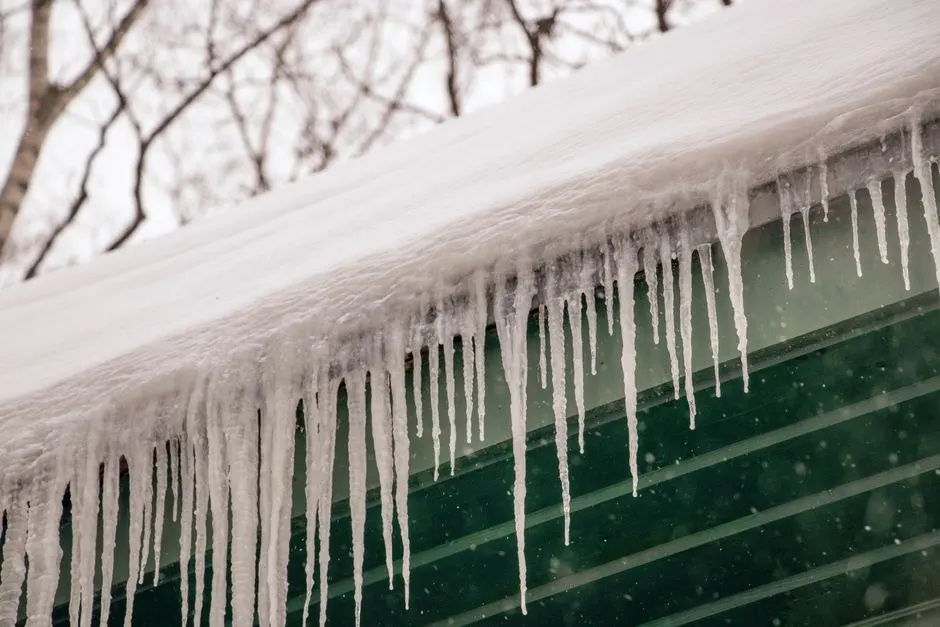
Ice dams form when heat escaping through your attic melts snow on the upper roof, and that meltwater refreezes along the cold eaves, creating a dam that forces water under your shingles and into your ceilings and walls. Preventing them in Black Canyon comes down to three things: keeping your attic cold, sealing air leaks into the attic, and clearing snow off the roof edges before a freeze. This guide covers exactly how to prevent ice dams and water damage in Black Canyon California, from insulation and ventilation fixes to safe removal and what to do if water is already inside.
Black Canyon sits at roughly 5,800 feet in the Uncompahgre Valley, and our winters swing hard - a 45-degree afternoon can drop to 12 degrees by 10 p.m. That freeze-thaw cycle is what builds ice dams here, and it's why so many homes in this corridor end up with stained ceilings and wet insulation by February. We're Water Damage Restoration, and we've dried out enough Black Canyon ceilings to know the pattern.
What causes ice dams in Black Canyon California?
Ice dams in Black Canyon California are caused by uneven roof temperatures - a warm upper roof deck from attic heat loss and a cold lower roof edge that stays below freezing. Snow melts over the warm section, runs downslope, hits the cold eave, and refreezes into a ridge of ice. As that ridge grows, meltwater backs up behind it and works its way under shingles, through felt, and into the roof deck.
Three conditions have to line up:
- Snow on the roof. Even 2 to 3 inches is enough if the other two conditions are present.
- Attic air above 32°F. Most Black Canyon attics we inspect run 15 to 25 degrees warmer than outside air during a cold snap.
- Eave surfaces below 32°F. North-facing eaves and shaded valleys stay frozen well into the afternoon.
The heat source is rarely the furnace itself. It's warm air leaking from the living space - around recessed lights, bath fans, attic hatches, and the top plates where interior walls meet the ceiling. In homes built before 1990, which is most of the older stock along the canyon, those leaks are wide open. We see the same pattern across Water Damage Restoration in Uncompahgre Valley, where wind-driven snow piles against the same eaves every January.
Roof orientation matters too. A south-facing roof can shed its snow by noon and never dam. A north-facing roof on the same house may hold 8 inches of snow for three weeks. If your problem is always on one side of the house, that's why.
How to prevent ice dams and water damage in Black Canyon
Preventing ice dams in Black Canyon means keeping the roof deck uniformly cold from ridge to eave. You do that by stopping warm air from reaching the attic, adding insulation to slow heat transfer, and ventilating the attic so any heat that does get in escapes before it warms the roof deck.
Here's the order we recommend, cheapest and highest-impact first:
- Seal attic air leaks. Foam or caulk around every wire penetration, can light, bath fan housing, and top plate. A single unsealed attic hatch can dump as much warm air as a 2-square-foot hole in your ceiling.
- Add attic insulation. In our climate, aim for R-49 to R-60. That's roughly 16 to 20 inches of blown cellulose or fiberglass. If your attic has 6 inches of old batt, you're at about R-19 and losing heat all winter.
- Ventilate properly. You want 1 square foot of net free vent area for every 150 square feet of attic floor, split roughly 50/50 between intake at the soffits and exhaust at the ridge. Blocked soffit vents are the single most common defect we find.
- Keep the attic floor cold. Never lay insulation over soffit vents or stuff batts into rafter bays without leaving a 1-inch air channel.
- Install ice-and-water shield. A self-adhering membrane along the first 6 feet of eave, under the shingles, is code in most Colorado jurisdictions and it's your last line of defense if a dam forms anyway.
If you're not comfortable in the attic, a home energy auditor will do a blower-door test and infrared scan for $400 to $700 in 2026 pricing around Montrose. That tells you exactly where the heat is leaking instead of guessing.
For homes that already have water coming in - stained drywall, wet insulation, dripping can lights - the priority flips. Stop the source, then get the moisture out before mold sets in. Our water damage mitigation in Montrose, California team handles that sequence: we tarp or clear the dam, extract standing water, and dry the ceiling cavity with commercial air movers and dehumidifiers.
Signs you already have an ice dam problem
Ice dam water damage in Black Canyon California usually shows up indoors before you notice anything on the roof. The dam itself is often hidden under snow, but the water it pushes inside leaves clear evidence.
Watch for:
- Brown or yellow water stains on ceiling drywall, especially near exterior walls.
- Bubbling or peeling paint on the ceiling or upper wall.
- Icicles more than 6 inches long hanging from the eave line - that's a sign of continuous meltwater.
- Frost or moisture on the underside of roof sheathing in the attic.
- Damp, compressed insulation around the perimeter of the attic floor.
- A musty smell in upstairs rooms that wasn't there in October.
If you see any of these, the water has already bypassed your roof assembly. Ceiling stains that appear within 24 hours of a snow event usually mean active leaking, not an old stain. We handle those calls through our ceiling water damage repair in Montrose, California service, and the first step is always to find where the water is actually entering - not just to paint over the stain.
One more thing: check the attic after every significant snow. A 10-minute walk-through with a flashlight will catch 90% of ice dam problems before they reach your living space.
How to remove ice dams safely in Black Canyon California
Removing ice dams safely in Black Canyon California means never chipping, chopping, or salting the ice directly. You can remove snow from the roof with a roof rake, and you can melt channels through the ice with calcium chloride in a sock or pantyhose laid perpendicular to the eave - but you cannot hit the ice with a hammer, axe, or ice pick without risking shingle and flashing damage that costs far more than the dam.
Safe methods, in order of preference:
- Roof rake. Pull snow off the bottom 4 to 6 feet of roof with a long-handled rake from the ground. Never climb onto a snow-covered roof.
- Calcium chloride pucks. Fill a nylon stocking with calcium chloride, lay it vertically across the dam so it hangs over the eave. It melts a channel that lets water drain. Do not use rock salt - it damages shingles, kills landscaping, and stains siding.
- Professional steam removal. Low-pressure steam melts the dam without touching the shingles. This is the method we use when the dam is thick or the roof pitch is steep.
What not to do: don't pour hot water on the roof (it refreezes and adds to the dam), don't use a chisel or hatchet, and don't walk the roof in winter boots. Falls and shingle punctures are the two most common homeowner injuries and insurance claims we see from DIY ice dam work.
If water is already inside, the removal is only half the job. Wet insulation has to come out, the cavity has to dry, and any mold that started within 24 to 48 hours has to be addressed. That's a mold remediation after water damage in Montrose, California situation, and it's not something a box fan and a dehumidifier will fix.
What to watch out for: common mistakes
The most expensive ice dam mistakes in Black Canyon are the ones that turn a $500 problem into a $12,000 one. Here's what we see most often.
Mistake 1: Adding insulation without air sealing. Piling R-38 batts over an unsealed attic floor traps warm air against the roof deck and can make ice dams worse. Seal first, insulate second.
Mistake 2: Blocking soffit vents. When insulation is pushed tight against the roof deck at the eave, intake air stops. The attic overheats, the roof deck warms, and the dam builds. Use baffles every time.
Mistake 3: Using heat cables as a fix. Heat tape along the eave can open a drain path, but it doesn't address the heat loss causing the dam. It also raises your electric bill by $30 to $60 a month in a cold snap. Treat it as a band-aid, not a solution.
Mistake 4: Ignoring the first stain. A small ceiling stain in December is a small problem. The same stain in March, after three months of slow leaking, is wet framing, ruined insulation, and a mold colony. Water damage from ice dams in Black Canyon CA compounds every week you wait.
Mistake 5: Assuming insurance will cover everything. Most Colorado homeowner policies cover sudden ice dam water damage but exclude damage from long-term neglect. If the adjuster can show you knew about the leak and didn't act, the claim gets denied. Document everything and call a pro early.
When to call a professional
Call a professional when water is actively coming through the ceiling, when the ice dam is thicker than 3 inches, when the roof pitch is too steep to rake safely, or when you see mold - any one of those is beyond a homeowner fix. We handle all four, and we can usually get to a Black Canyon address the same day.
Water Damage Restoration Montrose works this corridor year-round. We start by stopping the water source, then extract, dry, and verify moisture levels with thermal imaging and pin meters before we close anything up. If the ice dam needs to come off first, we coordinate that too.
If you're not sure whether you have a problem, call us and describe what you're seeing. A five-minute phone call is cheaper than a ceiling replacement.
Frequently Asked Questions
What causes ice dams in Black Canyon California?
Ice dams in Black Canyon California form when attic heat above 32°F melts roof snow that refreezes at the cold eave, usually below 32°F. The resulting ice ridge traps meltwater, which backs up under shingles. Our 5,800-foot elevation and hard overnight freezes make this a near-annual event on north-facing roofs.
How do I prevent ice dams and water damage in Black Canyon?
Seal attic air leaks, add R-49 to R-60 insulation, and keep soffit and ridge vents clear so the roof deck stays cold. Rake the bottom 4 to 6 feet of snow after each storm. Those three steps prevent most ice dams in Black Canyon without any roof heating cables.
Does insurance cover ice dam water damage in Black Canyon CA?
Most Colorado policies cover sudden ice dam water damage but exclude long-term neglect. If the leak was visible for weeks and unreported, the claim may be denied. Document the damage with photos and call a restoration company within 24 to 48 hours to protect your claim.
When should I worry about ice dams in Black Canyon?
Worry when icicles exceed 6 inches, when you see ceiling stains, or when snow has sat on the roof for more than a week without sliding. Those three signs mean a dam is likely forming or already active. Act before the next freeze.
How much does ice dam water damage repair cost in Black Canyon CA?
Typical 2026 pricing in this area runs $1,200 to $3,500 for ceiling and insulation drying, and $4,000 to $12,000 if mold remediation and drywall replacement are needed. Catching it in the first 48 hours usually keeps you at the low end.
Get help with Water Damage Restoration in Montrose
If ice dams have already pushed water into your Black Canyon home, we can stop the leak, dry the structure, and get your ceilings back to normal. Call Water Damage Restoration Montrose at (833) 321-7153 - we answer 24 hours a day through the winter.