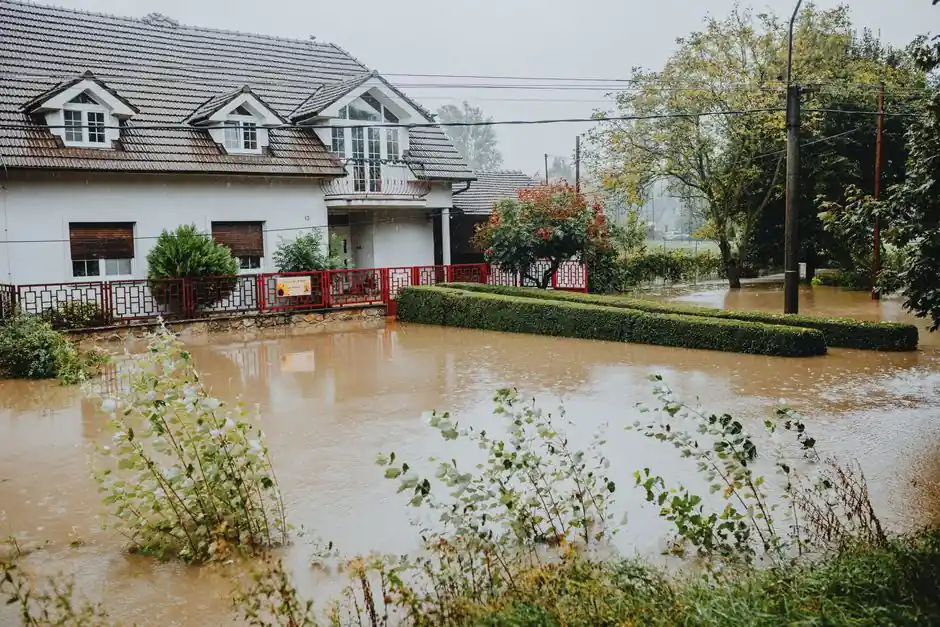
Cleaning up after a sewage backup in South Montrose means treating the water as contaminated, not just wet. You stop the source, keep people and pets out, remove and dispose of anything porous the sewage touched, then disinfect, dry, and verify the space with moisture meters before you rebuild. Everything below is the order we actually work in, plus what it costs in 2026 and the mistakes that turn a two-day cleanup into a two-week rebuild.
We run these calls across South Montrose every month, and the buildings here have their own quirks. The rest of this post walks through the first 30 minutes, the full cleanup sequence, cost ranges, and when it's time to hand it to our team.
Why sewage backups are a health emergency, not a mess
Sewage backup water is Category 3 water, which means it carries bacteria, viruses, and parasites that cause real illness. The EPA classifies it as black water, and the CDC warns that even a thin film left behind can transmit E. coli, Salmonella, hepatitis A, and norovirus. That's why a shop vac and a bottle of bleach are not a cleanup plan.
South Montrose sits on older clay and cast-iron laterals that root systems love. When a line clogs or the city main surcharges during a heavy rain, the waste has nowhere to go but up through the lowest drain in the building - usually a basement floor drain, a laundry standpipe, or a first-floor shower. In our experience, roughly 7 out of 10 backups we see in this neighborhood start at a floor drain in a finished or semi-finished basement.
Contamination doesn't stay where the water pooled. Sewage wicks into drywall, baseboards, carpet pad, and the bottom plate of framing within hours. By the 24-hour mark, mold colonization begins in any material that stayed wet. By 48 hours, that smell you noticed becomes a microbial problem, not an odor problem.
What to do in the first 30 minutes
Your first 30 minutes after a sewage backup in South Montrose should be about stopping exposure, not cleaning. Get people and pets out of the affected area, shut off the water feeding the backup if it's a fixture, and call a plumber or the city if the main is surcharging.
- Stop the source. If a toilet or laundry line is overflowing, shut the fixture supply valve. If the city main is backing up, stop using water in the whole house and call Public Works.
- Kill the power to the affected area at the breaker if water is anywhere near outlets, appliances, or the panel. Don't wade in to flip a switch.
- Block the area. Close doors, tape off the doorway, and keep kids and pets out. Wear rubber boots and nitrile gloves if you have to step in.
- Photograph everything before you move a single item. Insurers want the pre-cleanup condition, and your adjuster will ask for it.
- Call your insurance company and open a claim. Most standard homeowners policies in California exclude sewer backup unless you added the endorsement - more on that below.
If the backup is more than an inch deep or has reached drywall, don't try to handle it yourself. Our sewage cleanup in Montrose, California crew handles the extraction, disposal, and disinfection so you're not the one exposed to the waste.
How do I clean up after a sewage backup in South Montrose California?
You clean up after a sewage backup in South Montrose California by removing the water and all contaminated porous materials, then disinfecting every hard surface the water touched, then drying the structure to below 16% moisture content. Skip any of those three and the problem comes back.
Step 1: Extract the standing water
Pump or vacuum out the standing sewage first. A wet/dry shop vac works for a small, contained spill, but for anything over about 2 inches deep you want a truck-mounted extractor - it pulls the water out faster and gets the subfloor drier before contamination spreads. Our water extraction in Montrose, California team typically pulls 40 to 120 gallons out of a backed-up South Montrose basement before we even start the disinfection.
Step 2: Remove and bag contaminated materials
Anything porous that touched the sewage has to go. That means carpet and pad, drywall up to at least 12 inches above the water line, baseboards, insulation, and any cardboard, fabric, or particleboard it reached. Double-bag it in 6-mil poly and haul it out - don't leave it in the garage, because it will keep off-gassing.
Step 3: Disinfect every hard surface
After removal, we scrub concrete, framing, tile, and studs with an EPA-registered disinfectant rated for Category 3 water. Household bleach diluted to 1 cup per gallon works on bare concrete but it corrodes metal fasteners and doesn't penetrate porous surfaces, which is why we use a commercial quat or accelerated hydrogen peroxide instead. Let the disinfectant dwell for the full contact time on the label - usually 10 minutes - then wipe or rinse.
Step 4: Dry the structure
Air movers and dehumidifiers run until the framing reads below 16% on a pin meter and the ambient relative humidity in the room is under 50%. In a typical South Montrose basement, that's 3 to 5 days of continuous drying. We check moisture daily and don't pull equipment until the numbers hold for two consecutive readings.
Step 5: Verify and rebuild
Once the space is dry and clean, we do a final antimicrobial pass and, if there was any delay before cleanup started, a mold check. Only then does drywall, flooring, and trim go back in. If you had a slow response, our mold remediation after water damage in Montrose, California team handles the remediation before the rebuild.
What you should never do after a sewage backup
The most common mistakes we see after a sewage backup in South Montrose are the ones that turn a cleanup into a rebuild. Here's what to avoid.
- Don't run your HVAC. If the air handler or furnace sits in or near the flooded space, running it pulls aerosolized sewage particles through the whole house.
- Don't mix bleach and ammonia. It creates chloramine gas. If you used a cleaner first, read the label before you add bleach.
- Don't try to save carpet or pad. Category 3 water means it's gone. Cleaning it just spreads contamination.
- Don't dry it with box fans and open windows. That moves contaminated air around and doesn't get the structure dry enough to stop mold.
- Don't wait for the smell to go away on its own. It won't. The odor is a symptom of active microbial growth.
- Don't skip the moisture meter. Drywall can feel dry to the touch and still read 25% inside the cavity.
If you're not sure whether the water is Category 2 or Category 3, treat it as Category 3. The cost of over-treating is a few hundred dollars. The cost of under-treating is a gutted room.
How much does sewage backup cleanup cost in South Montrose CA?
Sewage backup cleanup in South Montrose CA runs $1,200 to $3,500 for a contained basement or bathroom spill, and $4,500 to $12,000 or more when the backup reached finished living space. Those are typical 2026 pricing ranges for this area, and they move with how much material has to be removed and how long the drying takes.
Here's how the numbers break down:
- Emergency call-out and extraction: $350 to $900, depending on time of day and volume.
- Contaminated material removal and disposal: $400 to $1,800. Drywall, carpet, and pad are the big line items.
- Disinfection and antimicrobial treatment: $300 to $800 per affected room.
- Structural drying: $75 to $150 per day per room for equipment, usually 3 to 5 days.
- Mold remediation, if needed: $1,500 to $6,000 depending on square footage.
- Rebuild (drywall, flooring, trim, paint): $1,000 to $5,000+.
Most of our South Montrose customers pay a $500 to $1,000 deductible and their insurer covers the rest - if they have the sewer backup endorsement. Standard HO-3 policies in California exclude sewer backup by default. The endorsement usually adds $50 to $150 a year to your premium and raises your coverage limit to $10,000 or $25,000. If you don't have it, we can still do the work; you'll just be paying out of pocket, and we'll give you a written scope and price before we start.
If the backup also damaged a kitchen or ceiling, those are separate line items. Our kitchen water damage repair in Montrose, California and ceiling crews handle the rebuild after the sewage work is signed off.
When to call a professional
Call a professional any time the backup involved more than a single toilet overflow, reached drywall or carpet, or sat for more than a few hours before you noticed it. Those three conditions cover about 90% of the sewage calls we run in South Montrose.
You should also call us if:
- The backup came from the city main or a floor drain, not a fixture.
- Anyone in the house is pregnant, immunocompromised, elderly, or under 5.
- You can smell sewage in a room that never got wet - that means it's in the wall cavity or under the slab.
- Your homeowner's insurance is involved and you need documentation for the claim.
- You've already cleaned and the smell came back within a week.
Water Damage Restoration Montrose handles emergency sewage cleanup, extraction, disinfection, drying, and the rebuild that follows. We serve the whole South Montrose area, and we can be on-site the same day you call. If you're weighing whether to DIY or hand it off, the honest answer is: if you have to ask, hand it off. The health risk isn't worth the savings.
Frequently Asked Questions
How do I clean up after a sewage backup in South Montrose California?
Stop the source, keep everyone out, extract the standing water, remove and bag all porous materials the sewage touched, disinfect hard surfaces with an EPA-registered Category 3 product, then dry the structure below 16% moisture. Most South Montrose homes take 3 to 5 days of drying. If the backup reached drywall or carpet, call a pro.
Is sewage backup water dangerous in South Montrose?
Yes. Sewage is Category 3 black water and carries E. coli, Salmonella, hepatitis A, and norovirus. Even a thin film left on concrete or framing can transmit illness. Anyone pregnant, immunocompromised, elderly, or under 5 should stay out of the affected area entirely until it's been disinfected and dried.
Does insurance cover sewage backup cleanup in South Montrose?
Only if you added the sewer backup endorsement. Standard California HO-3 policies exclude it. The endorsement typically costs $50 to $150 a year and raises your limit to $10,000 or $25,000. If you have it, your deductible - usually $500 to $1,000 - is your only out-of-pocket cost for the cleanup.
How much does sewage backup cleanup cost in South Montrose CA?
Typical 2026 pricing is $1,200 to $3,500 for a contained basement or bathroom spill, and $4,500 to $12,000 or more if it reached finished living space. Extraction, disposal, disinfection, drying, and rebuild are the main cost drivers. Most insured homeowners pay only their deductible.
Can I stay in my house during sewage backup cleanup?
Usually yes, if the affected area can be sealed off and you have a working bathroom and kitchen elsewhere in the home. We tape off doorways and run negative air where needed. If the backup reached the HVAC system or more than one living area, we'll tell you to stay elsewhere until the disinfection is done.
Get help with Water Damage Restoration in Montrose
Sewage backups don't get better with time - they get more expensive. Our team handles the extraction, disinfection, drying, and rebuild so you're not the one exposed to the waste.
Call Water Damage Restoration Montrose at (833) 321-7153 for same-day emergency sewage cleanup in South Montrose and the surrounding area.